

Introduction: Why Do My Nails Have White Spots?
Have you ever noticed a few small white spots on your nails and wondered where they came from? If you’re asking, “Why Do My Nails Have White Spots?”, you’re not alone. White marks on fingernails are pretty common, and in many cases, they’re nothing to worry about.
There are several possible reasons they can show up. A minor injury to the nail is one of the most common causes, but nail biting, picking, manicures, and certain nail products can also contribute. Less often, white areas may be associated with a fungal infection or another nail condition.
One thing worth clearing up is the common belief that white spots automatically mean you have a calcium deficiency. That’s not usually the case.
In this guide, we’ll go over the common causes of white spots, how long they may take to grow out, what you can do to protect your nails, and when a change should be checked by a healthcare professional.

What Do White Spots on Nails Mean?
White spots on the nails are sometimes described as leukonychia, which is a general term for white discoloration of the nail.
They can appear as tiny dots, larger patches, or even white lines. The appearance alone doesn’t always tell you exactly why they’re there.
It can be more helpful to look at the bigger picture. For example, consider whether the spot is slowly moving toward the tip as your nail grows, whether several nails are affected, and whether you have other symptoms such as pain, swelling, itching, or changes in nail texture.
For many people, an isolated white spot is simply the result of minor trauma to the nail and eventually grows out.

Why Do My Nails Have White Spots?
There’s no single answer to “Why Do My Nails Have White Spots?” Different habits, injuries, and nail conditions can cause white areas to appear.
Minor Nail Injury
A small injury is one of the most common reasons you may notice a white spot.
You might not even remember hurting the nail. A bump, repeated pressure, or minor trauma during a manicure can sometimes affect the nail as it grows.
What’s confusing is that the white spot may become noticeable days or weeks after the original injury. By then, you may have completely forgotten what happened.
If the spot gradually moves toward the tip as the nail grows and no other symptoms develop, it will often grow out naturally.
Nail Biting or Picking
Frequent nail biting or picking can cause repeated minor trauma to the nail and the surrounding skin.
These habits may also irritate the cuticle and the skin around the nail, which can make the area more vulnerable to damage.
If you tend to bite or pick at your nails and keep noticing new white marks, reducing the habit can help prevent additional trauma.
Manicure or Nail Treatment Damage
Gel manicures, acrylics, artificial nails, and frequent filing can sometimes leave the natural nail looking different.
The manicure itself isn’t necessarily the problem. Damage is more likely when the natural nail is over-filed, products are removed too aggressively, or gel polish is peeled off instead of being removed properly.
If you regularly use artificial nail products and notice white spots or other changes afterward, consider giving your natural nails some time without enhancements and switching to gentler nail-care practices.
You may also want to read Why Are My Nails Thin After Gel? for more information about nail changes after gel manicures.
Allergic Reaction or Irritation
Some nail products contain ingredients that can irritate the skin or trigger an allergic reaction in people who are sensitive to them.
If the white area appears along with itching, redness, swelling, peeling skin, or ongoing irritation, it may be more than a simple mark from minor trauma.
If you suspect a nail product is causing the reaction, stop using it and consider talking with a healthcare professional, particularly if the symptoms don’t improve.
Fungal Nail Infection
A fungal nail infection can sometimes cause white areas or discoloration, but it usually causes other nail changes as well.
The affected nail may become:
- Thicker than usual
- Brittle or crumbly
- Discolored
- Rough or uneven
- Separated from the nail bed
An isolated white spot that simply grows toward the tip is different from a nail that continues to become thicker, weaker, or more discolored.
If the nail keeps changing instead of growing out normally, it’s worth having it evaluated by a healthcare professional.
Nutritional Deficiencies
Nutrition plays an important role in overall nail health, but a white spot by itself doesn’t tell you that you’re deficient in a particular vitamin or mineral.
Your body needs adequate protein, vitamins, and minerals to support normal nail growth. However, it’s easy to see a white spot and immediately assume that you’re missing calcium or another nutrient when there may be a much simpler explanation.
In particular, white spots on nails are not a reliable way to diagnose calcium deficiency.
If you’re experiencing other symptoms or you’re concerned that your diet may not be providing enough nutrients, talk with a healthcare professional before starting supplements.
Other Health Conditions
Certain health conditions can affect nail appearance, but white spots alone usually aren’t enough to identify an underlying medical problem.
Pay attention if the changes are widespread, affect several nails, keep coming back, or appear alongside other symptoms.
In those situations, a healthcare professional can look at the nail changes along with your overall health and medical history to help

Determine the likely cause.
Are White Spots on Nails a Sign of Calcium Deficiency?
This is one of the first questions people ask when they notice white marks on their nails.
The short answer is not necessarily.
A small white spot on a fingernail doesn’t automatically mean you’re low in calcium. In many cases, these marks are related to minor trauma to the nail rather than a calcium deficiency.
So, seeing a white spot isn’t a good reason to start taking calcium supplements on your own.
If you’re concerned about a possible nutrient deficiency, it’s better to look at your overall diet and discuss your concerns with a healthcare professional. They can help determine whether you actually need testing or treatment instead of relying on one change in your nails.
Are White Spots on Nails Normal?
In many cases, yes.
A small, isolated white spot on an otherwise healthy nail is usually not a reason to panic, especially if there’s no pain, swelling, or other noticeable change.
The spot may simply move toward the tip as the nail grows. Eventually, you can trim it away as part of your normal nail growth.
That said, it’s still important to pay attention to unusual nail changes. Large areas of white discoloration, changes affecting several nails, changes in nail thickness or texture, or symptoms such as pain and swelling deserve a closer look.
How Long Do White Spots on Nails Take to Go Away?
If a white spot is caused by minor trauma, it usually won’t disappear overnight.
Instead, the mark generally moves toward the tip as the nail grows. Fingernails grow slowly, so it can take several weeks or longer before the spot becomes less noticeable or grows out completely.
The exact timeline varies from person to person and depends on how quickly the nail grows and where the mark is located.
Trying to scrape, file, or buff the spot away won’t make it disappear faster. In fact, doing so can damage the nail even more. In most cases, the better approach is simply to let the nail grow naturally.
How to Prevent White Spots on Your Nails
You can’t prevent every white spot, but a few simple habits can reduce unnecessary nail damage.
Avoid Biting and Picking Your Nails
Frequent biting and picking can cause small injuries to the nail and surrounding skin.
Keeping your nails at a comfortable length and avoiding these habits can help protect the nail surface from repeated trauma.
Be Gentle During Manicures
Manicures shouldn’t leave your natural nails painful or noticeably damaged.
Avoid aggressive filing, excessive buffing, or rough treatment around the cuticles. If your nails consistently feel sore after a manicure, consider changing your technique or taking a break from nail enhancements.
Don’t Over-File Your Nails
Your nails don’t need constant buffing to look healthy.
Excessive filing can thin the nail plate and make it more vulnerable to damage. If you file your nails, use gentle pressure and avoid repeatedly filing the same area.
Moisturize Your Nails and Cuticles
Regularly applying hand cream or cuticle oil can help prevent the skin around your nails from becoming excessively dry.
Moisturizing won’t make an existing white spot disappear, but it can be part of a healthy nail-care routine.
Protect Your Hands During Household Chores
Frequent exposure to water, detergents, and household cleaning products can leave your hands and nails dry and irritated.
Wearing gloves while washing dishes or cleaning can reduce direct exposure and help protect your hands.
Avoid Peeling Gel Polish
Peeling gel polish off can take layers of the natural nail with it, leaving the surface weaker or uneven.
If you use gel polish, have it removed properly or follow a safe removal method rather than pulling or picking the product off.
Maintain a Balanced Diet
Your nails need a variety of nutrients to grow normally.
Aim for a balanced diet that includes protein sources, vegetables, fruits, whole grains, nuts, seeds, and other nutrient-rich foods. A varied eating pattern is generally more helpful for overall nail health than relying on one particular food or supplement.
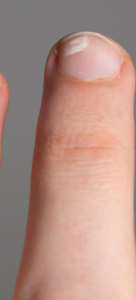
Can You Remove White Spots From Your Nails?
Usually, you can’t simply remove a white spot from the surface of your nail because the discoloration is part of the nail itself.
Scrubbing or aggressively buffing the area won’t address the underlying cause and may damage the nail further.
If the spot is the result of minor trauma, the simplest approach is usually to let the nail grow. As the nail grows out, the mark should gradually move toward the tip and can eventually be trimmed away.
When Should You See a Doctor?
Most small, isolated white spots don’t require urgent medical attention. However, unusual or persistent changes are worth discussing with a healthcare professional.
Consider making an appointment if:
- White areas cover a large portion of the nail.
- Several nails suddenly develop unusual white changes.
- The nail becomes thick, brittle, or crumbly.
- You notice pain, tenderness, or swelling.
- The nail starts lifting away from the nail bed.
- Other unusual color changes appear.
- The changes keep coming back without an obvious reason.
- You develop other symptoms along with the nail changes.
A healthcare professional can examine your nails and consider your other symptoms and medical history to determine whether further evaluation is needed.
FAQs: Why Do My Nails Have White Spots?
Why do my nails have white spots?
Common causes include minor nail trauma, nail biting or picking, and damage related to manicures or nail products. In some cases, infections or other nail conditions can also cause changes in nail color or appearance.
Are white spots on nails normal?
Small, isolated white spots can be common and are often harmless, particularly when the rest of the nail looks healthy and there are no other symptoms.
Does calcium deficiency cause white spots?
Not necessarily. A white spot by itself does not prove that you have a calcium deficiency. Minor trauma is a much more common explanation for an isolated white mark.
Can nail trauma cause white spots?
Yes. Even a small injury to the nail can result in a white mark that becomes noticeable as the nail continues to grow.
Can gel polish cause white spots?
Gel manicures can contribute to nail changes when the natural nail is damaged by aggressive filing, improper removal, or peeling the product off.
How long do white spots take to disappear?
White spots caused by minor trauma generally grow out with the nail rather than disappearing immediately. The timeline varies depending on how quickly your nails grow and where the spot is located.
Can white spots grow out?
Yes. If a white mark is related to minor trauma, it can gradually move toward the nail tip as the nail grows and eventually be trimmed away.
Should I worry about white spots on my nails?
A small, isolated white spot usually isn’t a reason to worry. However, widespread discoloration, pain, swelling, nail thickening, lifting, or other unusual changes should be evaluated by a healthcare professional.
Can vitamins get rid of white spots on nails?
Taking vitamins isn’t a guaranteed way to remove white spots. If a nutritional deficiency is confirmed, treating that deficiency may support normal nail health. However, supplements shouldn’t be taken simply because a white mark appears.
How can I prevent white spots on my nails?
Be gentle with your nails, avoid biting and picking, don’t over-file or aggressively buff them, remove gel polish properly, moisturize your nails and cuticles, and protect your hands during household chores.
Conclusion: Why Do My Nails Have White Spots?
If you’ve been wondering, “Why Do My Nails Have White Spots?”, the answer is often less concerning than it may seem. Small white marks can appear after minor nail trauma, biting, picking, or damage related to manicures and nail treatments.
It’s also important to remember that white spots don’t automatically mean you have a calcium or vitamin deficiency. Instead of trying to diagnose the cause from the spot alone, look at the overall condition of your nails and pay attention to any other symptoms.
For most minor white spots, patience and gentle nail care are all that’s needed. Let the nail grow naturally, avoid unnecessary damage, and keep your nails and surrounding skin moisturized.
If the changes are widespread, persistent, painful, or accompanied by swelling, thickening, lifting, or other unusual symptoms, it’s best to get professional advice.
Medical Disclaimer: This article is for educational purposes only and is not a substitute for professional medical advice, diagnosis, or treatment.