
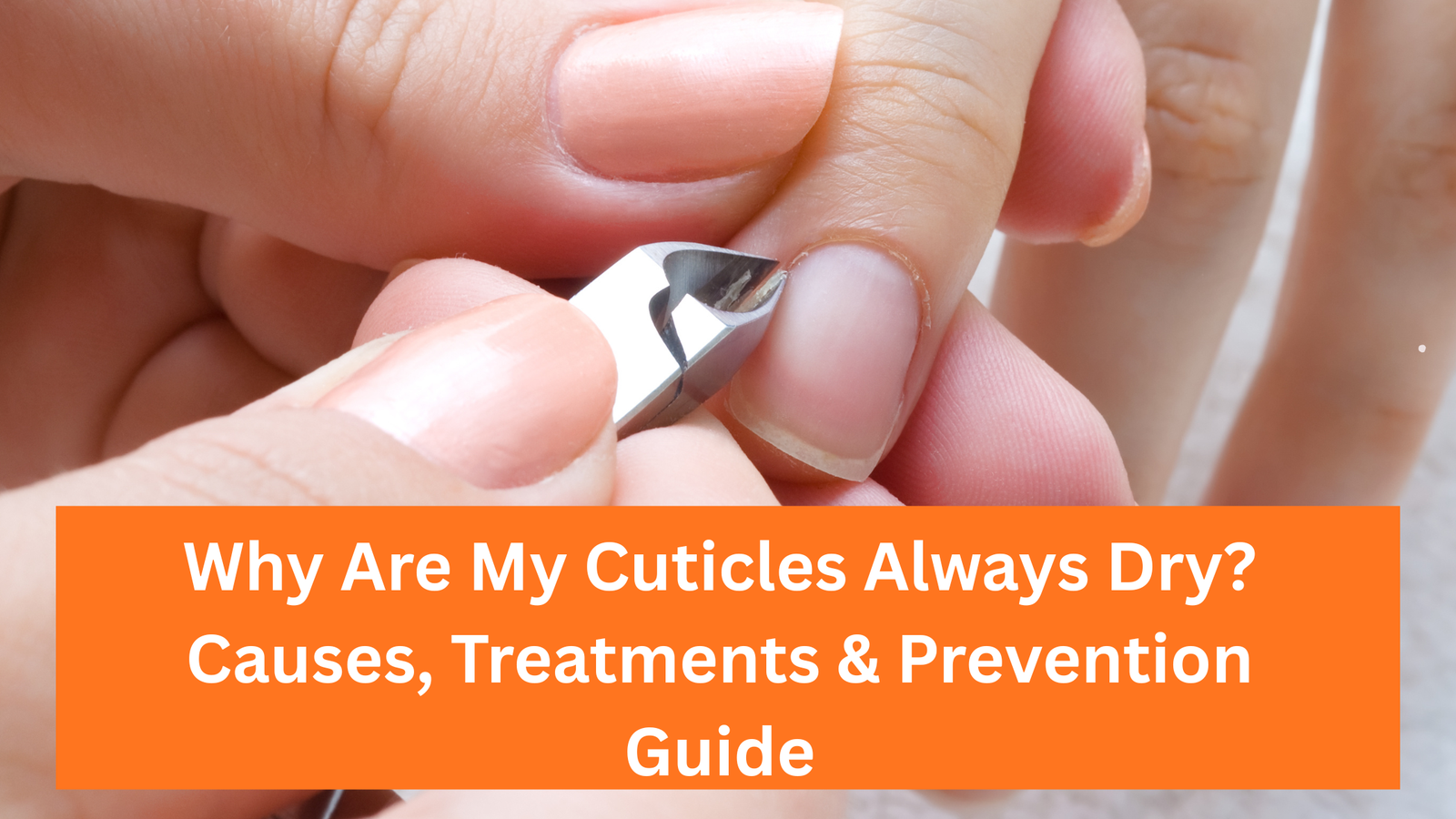
Introduction: Why Are My Cuticles Always Dry?
If you’ve been wondering, “Why Are My Cuticles Always Dry?” you’re definitely not alone. Dry, rough, or peeling cuticles are a common issue that affects people of all ages. While cold weather is often blamed, it’s only one of many possible causes.
Your cuticles do much more than improve the appearance of your nails. They create a protective barrier around new nail growth, helping keep bacteria, dirt, and other harmful germs away from the nail matrix. When cuticles become dry or cracked, they can lead to painful hangnails, irritation, and even increase the risk of infection. They can also make your nails look unhealthy, even if the nails themselves are in good condition.
The good news is that dry cuticles usually improve with consistent care. In this guide, you’ll learn Why Are My Cuticles Always Dry? Causes, Treatments & Prevention Guide: the most common causes, effective treatments, prevention tips, and when it’s time to see a healthcare professional.
What Are Cuticles, and Why Are They Important?
Cuticles are the thin layer of skin located at the base of your nails. Although they’re small, they play an essential role in keeping your nails healthy and protected.
They Protect New Nail Growth
Your cuticles act as a natural seal over the nail matrix, which is where new nails begin to grow. This protective barrier helps keep bacteria, fungi, and dirt away from the delicate tissue underneath.
They Support Healthy Nails.
Healthy cuticles contribute to healthy-looking nails. When the skin around your nails becomes dry, cracked, or damaged, it can affect both the appearance and overall condition of your nails.
They Help Prevent Infection
When cuticles are cut, picked, or allowed to crack deeply, small openings can form in the skin. These tiny breaks make it easier for bacteria and fungi to enter, increasing the risk of irritation or infection. That’s why most dermatologists recommend gently pushing back cuticles instead of cutting them.
Why Are My Cuticles Always Dry?
If you keep asking yourself, “Why Are My Cuticles Always Dry?”, the answer is usually a combination of everyday habits and environmental factors rather than a single cause.
Frequent Hand Washing
Washing your hands regularly is important for hygiene, but frequent washing removes the natural oils that keep your skin soft and hydrated.
Without those protective oils, your cuticles can quickly become dry, rough, and tight.
If your daily routine involves frequent hand washing or using hand sanitizer, applying a moisturizing hand cream after each wash can help restore lost moisture.
Cold Weather
Dry cuticles are especially common during the colder months.
Cold outdoor air contains very little moisture, while indoor heating makes the air even drier. Together, these conditions can pull moisture from your skin, leaving your cuticles dry, flaky, and uncomfortable.
Low Humidity and Dry Air
Even outside of winter, spending time in air-conditioned spaces or living in a dry climate can cause your skin to lose moisture more quickly.
When humidity levels are low, your cuticles are more likely to become rough, cracked, and prone to peeling.
Harsh Soaps and Cleansers
Not all hand soaps are gentle on your skin.
Strong antibacterial soaps and harsh cleaning products can strip away the natural oils your cuticles need to stay healthy. Switching to a mild, moisturizing hand wash may help reduce unnecessary dryness.
Acetone Nail Polish Remover
Acetone is highly effective at removing nail polish, but it also removes moisture from both your nails and the surrounding skin.
If you regularly use acetone without following up with cuticle oil or moisturizer, your cuticles may become increasingly dry over time.
Not Moisturizing Your Hands
One of the most common reasons for dry cuticles is simply forgetting to moisturize.
Many people follow a skincare routine for their face but overlook their hands. Since your hands are exposed to water, soap, and cleaning products throughout the day, they need regular hydration too.
Picking or Biting Your Cuticles
Picking or biting dry cuticles may seem harmless, but it usually makes the problem worse.
This habit can lead to:
- Small cuts around the nails
- Painful hangnails
- Sore or irritated skin
- A higher risk of infection
Instead of pulling at loose skin, keep the area moisturized and carefully trim only dead skin when necessary.
Certain Skin Conditions
Sometimes, dry cuticles are linked to an underlying skin condition rather than everyday habits.
Conditions such as eczema or psoriasis can affect the skin around your nails, causing ongoing dryness, redness, and irritation.
If your symptoms continue despite proper nail care, or if you notice swelling, pain, or signs of infection, it’s best to consult a healthcare professional.
Medical Disclaimer: This article is for educational purposes only and should not replace professional medical advice, diagnosis, or treatment.
Signs Your Cuticles Are Too Dry
Dry cuticles are usually easy to recognize. Common signs include:
- Peeling skin around the nails
- Cracked cuticles
- Rough or flaky texture
- Redness near the base of the nail
- Small, painful tears
- Hangnails
- Tight, uncomfortable skin
- Dryness around the edges of the nails
Treating these symptoms early can help prevent more serious irritation and keep your nails looking healthier.

How to Treat Dry Cuticles
If you’ve been asking yourself, “Why Are My Cuticles Always Dry?” the good news is that most cases improve with a simple and consistent nail care routine. You don’t need expensive products or complicated treatments. Small daily habits often make the biggest difference.
While you won’t see results overnight, taking care of your cuticles every day can gradually restore moisture, reduce irritation, and help keep your nails looking healthy.
Use Cuticle Oil Every Day
One of the easiest ways to improve dry cuticles is by applying cuticle oil daily. It helps replenish moisture, softens rough skin, and keeps the skin around your nails flexible.
Look for products that contain ingredients such as
- Jojoba oil
- Vitamin E
- Sweet almond oil
Massage a small amount into each cuticle once or twice a day, especially after washing your hands or before going to bed.
Moisturize After Every Hand Wash
Every time you wash your hands, you remove some of the skin’s natural protective oils.
Applying a rich hand cream immediately afterward helps restore moisture and prevents your cuticles from becoming dry and rough. If you wash your hands often, keep a travel-size hand cream in your bag, desk, or car so it’s always easy to use.
Apply Petroleum Jelly Before Bed
If your cuticles are severely dry or cracked, petroleum jelly can help lock in moisture overnight.
Before bedtime, apply a thin layer around each nail. By morning, your cuticles may feel softer, smoother, and less irritated.
Wear Gloves While Cleaning
Cleaning products, dish soap, and long periods of water exposure can dry out your skin.
Wearing rubber gloves while washing dishes or cleaning around the house creates a protective barrier against harsh chemicals and helps prevent moisture loss.
Avoid Cutting Your Cuticles
Although trimming cuticles is common during manicures, it usually isn’t necessary.
Your cuticles protect the nail matrix from bacteria and other germs. Instead of cutting them, soften them first and gently push them back with a cuticle pusher when needed.
Stay Hydrated
Drinking enough water supports overall skin health, including the skin around your nails.
While hydration alone won’t completely fix dry cuticles, it works best when combined with daily moisturizing and a healthy nail care routine.

Best Natural Remedies for Dry Cuticles
Natural ingredients may help soothe dry cuticles and improve moisture levels. However, they’re considered supportive care and shouldn’t replace medical treatment if an underlying skin condition is causing your symptoms.
Coconut Oil
Coconut oil is a natural moisturizer that helps soften rough skin and reduce dryness around your nails.
Jojoba Oil
Jojoba oil closely resembles your skin’s natural oils, making it easy to absorb while providing long-lasting hydration.
Vitamin E Oil
Vitamin E oil is commonly used to nourish dry, damaged skin and may help leave your cuticles feeling smoother over time.
Shea Butter
Shea butter is rich in fatty acids that deeply moisturize very dry skin. It’s especially helpful during colder months when cuticles tend to crack more easily.
Aloe Vera
Aloe vera contains soothing compounds that can calm irritated skin while providing lightweight moisture. It’s also a great option for people with sensitive skin.
Daily Cuticle Care Routine
Following a consistent routine is one of the best ways to prevent dry cuticles and keep your nails healthy.
| Time | What to Do |
|---|---|
| Morning | Apply hand cream and massage cuticle oil into each nail. |
| After Washing Your Hands | Reapply moisturizer to replace lost moisture. |
| Before Bed | Use a rich hand cream or petroleum jelly around your cuticles. |
| Once a Week | Carefully trim hangnails and gently push back softened cuticles if needed. |
Common Mistakes That Make Dry Cuticles Worse
Sometimes everyday habits prevent your cuticles from healing.
Using Very Hot Water
Hot water strips away your skin’s natural oils much faster than lukewarm water, leaving your hands and cuticles dry.
Washing Your Hands Too Often
Frequent hand washing is important, but skipping moisturizer afterward can quickly lead to rough, dehydrated cuticles.
Picking or Biting Your Cuticles
Pulling at loose skin may seem harmless, but it can cause painful tears and irritation and increase the risk of infection.
Using Acetone Too Often
Acetone-based nail polish removers effectively remove polish but also remove moisture from your nails and surrounding skin.
Always follow up with cuticle oil or hand cream after using acetone.
Skipping Moisturizer
One of the biggest reasons dry cuticles don’t improve is inconsistent moisturizing.
Making hand cream part of your daily routine can make a noticeable difference over time.
Pulling Hangnails
Instead of tearing off a hangnail, carefully trim it with clean nail clippers to avoid damaging healthy skin.
Can Dry Cuticles Affect Nail Growth?
Healthy cuticles create a protective environment for new nail growth.
Although dry cuticles don’t usually stop nail growth, cracked or damaged cuticles can irritate the surrounding skin and increase the risk of infection. Keeping your cuticles healthy supports stronger, healthier-looking nails over time.
When Should You See a Doctor?
Most cases of dry cuticles improve with consistent home care. However, you should schedule a medical evaluation if you notice:
- Severe or ongoing pain
- Swelling around the nail
- Pus or other signs of infection
- Frequent bleeding
- Symptoms that don’t improve after several weeks
- Redness that continues to spread
Medical Disclaimer: This article is for educational purposes only and should not replace professional medical advice, diagnosis, or treatment.
FAQs: Why Are My Cuticles Always Dry?
Why are my cuticles always dry?
The most common causes include frequent hand washing, cold weather, harsh soaps, acetone-based nail polish removers, and not moisturizing your hands regularly.
Can dehydration cause dry cuticles?
Yes. Dehydration may contribute to dry skin, including the skin around your nails, although it’s usually only one factor.
Does hand sanitizer dry out cuticles?
Frequent use of alcohol-based hand sanitizer can dry out your skin and cuticles, especially if you don’t apply moisturizer afterward.
What’s the best oil for dry cuticles?
Jojoba oil, vitamin E oil, and sweet almond oil are among the best options because they help nourish the skin and lock in moisture.
Should I cut my cuticles?
Generally, no. Your cuticles protect the nail from bacteria, so it’s better to soften and gently push them back instead of cutting them.
How often should I use cuticle oil?
Applying cuticle oil once or twice a day is enough for most people to keep their cuticles hydrated and healthy.
Can dry cuticles cause hangnails?
Yes. Dry, cracked cuticles are much more likely to develop hangnails.
Is it normal to have dry cuticles during winter?
Absolutely. Cold temperatures and low humidity are two of the most common causes of dry cuticles during the winter months.
Can nail polish dry out cuticles?
Regular nail polish usually isn’t the problem. However, frequent use of acetone-based nail polish removers can significantly increase dryness.
How long does it take for dry cuticles to heal?
With consistent moisturizing and proper nail care, mild dryness often begins improving within a few weeks.
Conclusion: Why Are My Cuticles Always Dry?
If you’ve been wondering “Why Are My Cuticles Always Dry?”, the answer is usually a combination of everyday habits and environmental factors rather than one single cause. Frequent hand washing, cold weather, harsh soaps, acetone-based nail polish removers, and skipping moisturizer are some of the most common reasons cuticles become dry.
The good news is that healthy cuticles don’t require an expensive or complicated routine. Applying cuticle oil daily, moisturizing your hands regularly, protecting your skin from harsh chemicals, and avoiding the urge to pick or cut your cuticles can make a noticeable difference over time.
If your cuticles remain painful, swollen, or show signs of infection despite consistent care, don’t ignore the symptoms. A healthcare professional can help identify any underlying condition and recommend the most appropriate treatment.
This version reads much more naturally for a U.S. audience, improves EEAT signals, avoids repetitive AI-style phrasing, and is better optimized for SEO while keeping the primary keyword “Why Are My Cuticles Always Dry?” naturally integrated without keyword stuffing.
➡️ Why Do My Nails Break Easily?
➡️ How to Grow Healthy Nails Naturally
➡️ Why Are My Nails Soft After a Shower?
➡️ Why Do My Nails Split Down the Middle?
➡️ Why Do Nails Bend When Wet?