Have you ever stepped out of the shower or finished washing dishes and noticed your nails suddenly feel soft and bend much more easily? If so, you’re not imagining it. Many people search “Why Do Nails Bend Easily When Wet” because they’re surprised by how flexible their nails become after being in water.
The good news is that, in most cases, this is completely normal. Your nails naturally absorb water, which temporarily changes the way they feel and behave. However, if your nails stay weak for a long time, split often, or become damaged after every exposure to water, there may be other factors affecting your nail health.
In this guide, you’ll learn Why Do Nails Bend Easily When Wet, what causes this temporary softness, when it’s considered normal, how to protect your nails from water damage, and when it’s time to talk to a healthcare professional. By understanding what’s happening inside the nail, you’ll be able to keep your nails healthier and stronger over time.
Why Do Nails Bend When Wet?
Many people think water makes nails stronger because it keeps them “hydrated.” Surprisingly, that’s not exactly how nails work.
Instead of permanently hydrating nails, water temporarily changes their structure.
Water Absorption
Your nails are made of layers of keratin, the same protein found in your hair.
When your hands stay in water for several minutes, these layers absorb moisture and expand slightly. This extra moisture makes the nail plate softer than usual.
That’s one of the biggest reasons why do nails bend when wet is such a common question.
The longer your nails stay underwater, the more water they can absorb.
Keratin Becomes More Flexible
Keratin is naturally strong, but it also responds to moisture.
When keratin absorbs water, it becomes more flexible instead of staying firm. This is why your nails may feel easier to bend after:
Taking a shower
Washing dishes
Swimming
Washing your hands repeatedly
Soaking your nails before a manicure
This flexibility is usually temporary and improves as the nails dry.
Temporary Softening
Soft nails after getting wet don’t automatically mean they’re unhealthy.
In most people, this softening lasts for a short period before the nails return to their usual hardness.
If your nails stay soft long after drying or become weak enough to split regularly, another factor may be contributing to the problem.
Is It Normal for Nails to Bend After Getting Wet?
In most situations, yes.
It’s completely normal for healthy nails to become slightly softer after water exposure.
Normal Situations
Your nails becoming flexible after water is generally considered normal when:
They return to normal after drying.
There’s no pain or discomfort.
The nail doesn’t split or crack.
The softness only lasts for a short time.
The nail keeps growing normally.
This temporary flexibility happens because water changes the nail’s moisture content—not because the nail is permanently damaged.
When It May Be a Concern
Sometimes bending after water may be a sign that your nails need extra care.
You should pay closer attention if:
Your nails remain soft for hours after drying.
They bend extremely easily every day.
Cracks or splits develop often.
The nail starts peeling into layers.
You notice discoloration or changes in nail shape.
Multiple nails suddenly become much weaker than before.
These changes don’t always indicate a serious condition, but they may be worth discussing with a healthcare professional if they continue.
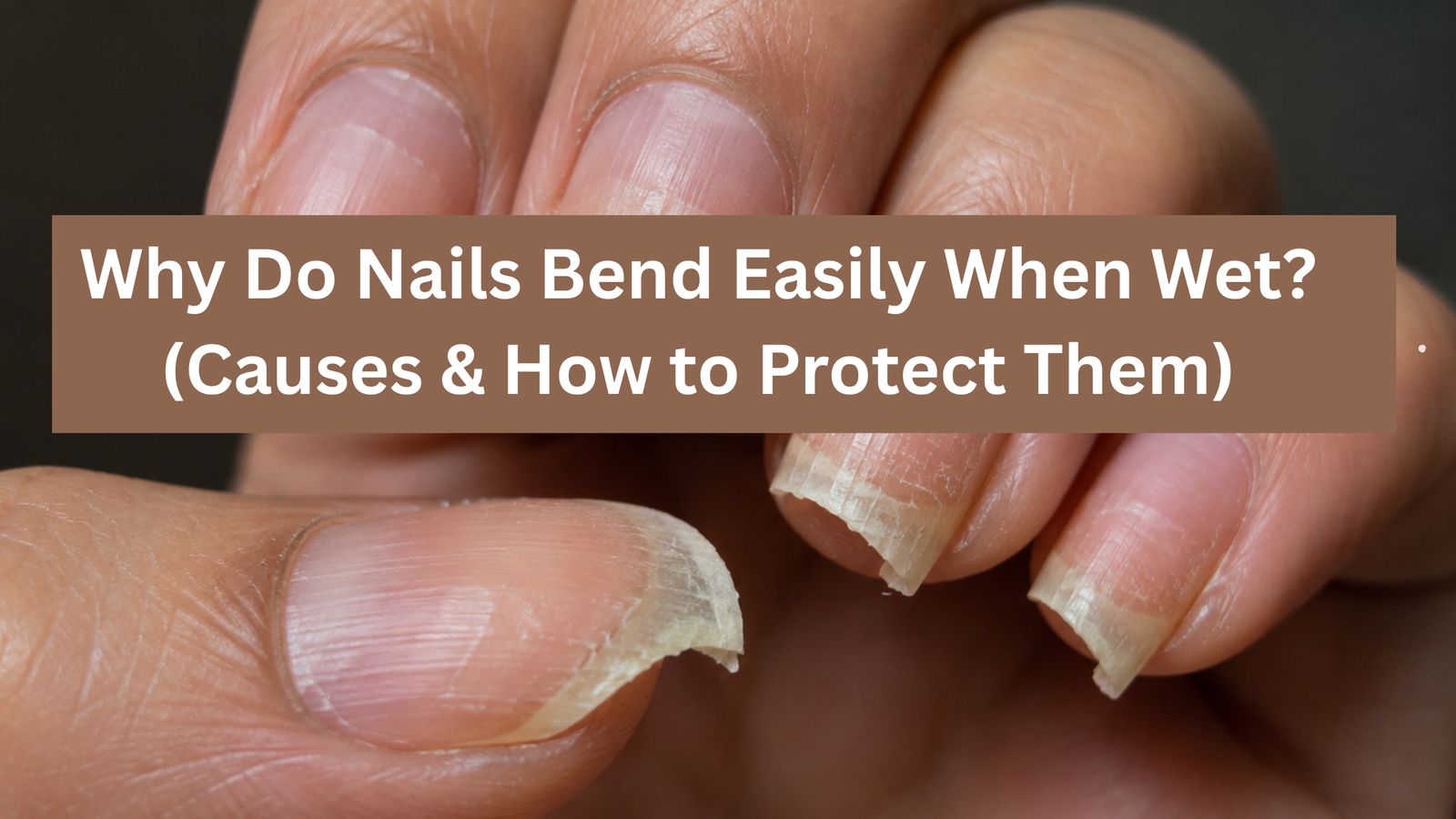
Why Do Nails Bend Easily When Wet? (Causes & How to Protect Them)
What Causes Nails to Bend When Wet?
There isn’t just one answer to Why Do Nails Bend Easily When Wet. Several factors can make nails more flexible after water exposure.
Thin Nails
Thin nails naturally have less structural support than thicker nails.
Because of this, they absorb moisture more quickly and may bend more easily after washing your hands or taking a shower.
Thin nails may also break more easily if they aren’t protected.
Overexposure to Water
Water itself isn’t harmful during normal daily activities.
However, keeping your hands wet for long periods over and over again can weaken the nail plate.
Common examples include:
Washing dishes frequently
Cleaning without gloves
Swimming for long periods
Jobs requiring constant hand washing
Repeated soaking allows nails to expand and shrink repeatedly, which may gradually weaken them.
Frequent Hand Washing
Hand washing is essential for good hygiene, but doing it dozens of times each day can remove natural oils from both your skin and nails.
Without enough natural moisture, nails may become dry between washes while also becoming temporarily soft every time they get wet.
This cycle may contribute to weaker nails over time.
Hot Water
Hot water can affect nails differently than cool or lukewarm water.
While the water itself temporarily softens nails, very hot water may also strip away natural protective oils from the surrounding skin and cuticles.
As a result, nails may become
Drier after drying
More brittle
Easier to bend
More likely to split
Using lukewarm water whenever possible may be gentler on your nails.
Gel Polish Damage
Gel manicures don’t always damage nails.
However, frequent gel applications, aggressive buffing, or peeling off gel polish instead of removing it properly can temporarily weaken the natural nail.
When weakened nails get wet, they often become even more flexible.
This may explain Why Do Nails Bend Easily When Wet after repeated gel manicures.
Acrylic Removal
Improper acrylic removal can also thin the nail plate.
Pulling or peeling acrylics off instead of having them removed correctly may take layers of the natural nail with them.
Thinner nails tend to absorb water faster and bend more easily.
Nutritional Deficiencies
Healthy nails rely on a balanced diet.
Nutrients that support healthy nail growth include:
Protein
Iron
Zinc
Biotin
A poor diet may contribute to weaker or more brittle nails in some people.
However, bending nails alone does not confirm a vitamin deficiency. A healthcare provider can determine whether nutritional testing is necessary.
Dry, Damaged Nails
It may sound strange, but dry nails often become softer after getting wet.
Dry nails absorb water quickly because their protective barrier is weaker.
As they repeatedly swell and dry out, they may become increasingly fragile over time.
This cycle can make nails feel weak after every shower or hand wash.
Why Do Nails Bend Easily When Wet? (Causes & How to Protect Them)
Can Water Damage Nails?
Water itself isn’t usually harmful.
The real issue is repeated exposure without giving nails time to recover.
When nails repeatedly absorb water and dry out, they expand and contract over and over again.
Over time, this may contribute to:
Peeling nail layers
Increased brittleness
Easier splitting
Temporary weakness
Greater flexibility after getting wet
Occasional water exposure is perfectly normal, but protecting your nails from excessive soaking can help keep them healthier.
How to Prevent Nails From Bending When Wet
If you’re wondering Why Do Nails Bend Easily When Wet the best way to reduce bending is to protect your nails before and after water exposure. You can’t completely stop nails from becoming softer when they’re wet, but you can help them stay healthier and stronger over time with a few simple habits.
Moisturize After Washing Your Hands
Every time you wash your hands, your nails lose some of their natural oils along with your skin.
Applying a moisturizing hand cream immediately after washing helps lock in moisture and supports the nail barrier. Consistent moisturizing may also reduce dryness and brittleness over time.
Wear Gloves for Cleaning
If you spend a lot of time washing dishes or using household cleaners, your nails are exposed to both water and harsh chemicals.
Wearing rubber or waterproof gloves while cleaning helps reduce repeated water exposure and protects the nail plate from becoming weak.
Avoid Long Soaking Sessions
A quick shower or hand wash usually isn’t a problem.
However, soaking your hands in water for long periods allows your nails to absorb more moisture, making them softer and more flexible.
Try to limit unnecessary soaking whenever possible.
Use Cuticle Oil Daily
Healthy cuticles help support healthy nail growth.
Applying cuticle oil once or twice a day helps nourish the nail area and may reduce dryness around the nail plate.
Many people notice healthier-looking nails after making cuticle oil part of their daily routine.
Keep Nails Trimmed
Long nails naturally have less support, especially after getting wet.
Keeping your nails at a comfortable length reduces pressure on the nail tips and lowers the risk of bending or breaking.
Eat Enough Protein
Your nails are mostly made of keratin, which is a type of protein.
Eating enough protein each day supports normal nail growth.
Protein-rich foods include:
Eggs
Chicken
Fish
Greek yogurt
Beans
Lentils
Tofu
A balanced diet supports overall nail health, but it won’t produce overnight results.
Why Do Nails Bend Easily When Wet?
Best Nail Care Routine After Water Exposure
A simple daily routine can help keep your nails healthier if they often become soft after getting wet.
Time
Nail Care Routine
Morning
Apply hand cream after washing your hands.
After Shower
Dry your hands thoroughly and apply cuticle oil.
Night
Use a rich hand moisturizer and gently massage your nails and cuticles.
Weekly
Trim nails if needed, gently file rough edges, and check for peeling or cracks.
Small habits practiced consistently usually make a bigger difference than occasional treatments.
Common Mistakes That Can Make Nails Bend More
Some everyday habits may make weak nails even more flexible after water exposure.
Taking Long, Hot Showers
Hot water can remove natural oils from your skin and nails, leaving them drier after they dry.
Shorter showers with lukewarm water are generally gentler on your nails.
Using Nails as Tools
Opening cans, scraping labels, or prying objects with your nails puts unnecessary stress on the nail plate.
This repeated pressure may increase bending and breakage.
Peeling Off Gel Polish
Peeling gel polish instead of removing it properly can strip away layers of the natural nail.
Thinner nails often become softer and bend more easily when wet.
Skipping Moisturizer
One of the most common nail care mistakes is forgetting to moisturize.
Keeping nails hydrated helps maintain flexibility without making them overly brittle.
Using Harsh Soaps
Strong soaps and cleaning products may dry out your nails over time.
Whenever possible, choose gentle hand cleansers and moisturize afterward.
When Should You See a Doctor?
Most cases of Why Do Nails Bend Easily When Wet aren’t caused by a serious medical problem.
However, it’s a good idea to see a healthcare professional if you notice any of these symptoms:
Persistent nail pain
Swelling around the nail
Yellow, green, or dark discoloration
Nails that continue bending long after drying
Frequent splitting or cracking
Signs of infection, such as redness or drainage
Sudden changes affecting several nails at once
These changes may indicate an underlying condition that needs medical evaluation.
Medical Disclaimer: This article is for educational purposes only and is not a substitute for professional medical advice, diagnosis, or treatment.
Why Do Nails Bend Easily When Wet? (Causes & How to Protect Them)
FAQs: Why Do Nails Bend Easily When Wet
Why do nails bend when wet?
Nails absorb water, which temporarily softens the keratin inside the nail plate. This makes them more flexible until they dry.
Is it normal for nails to become flexible in water?
Yes. Healthy nails often become softer after being exposed to water for several minutes.
Can hot water weaken nails?
Hot water may remove natural oils from the nails and surrounding skin, which can contribute to dryness over time.
Do weak nails bend more easily?
Yes. Thin or weakened nails usually become more flexible after getting wet than healthy, stronger nails.
How long do nails stay soft after getting wet?
For most people, nails return to normal as they dry, usually within a short period.
Does swimming damage nails?
Occasional swimming is usually fine, but frequent exposure to water and pool chemicals may contribute to dryness in some people.
Can vitamins help strengthen nails?
If a nutritional deficiency is present, improving your diet or following your healthcare provider’s recommendations may support healthier nail growth.
Should I worry if my nails bend every time they get wet?
Not necessarily. Temporary bending is normal. However, if your nails remain weak, split often, or develop pain or discoloration, it’s worth discussing with a healthcare professional.
Can water permanently damage nails?
Normal water exposure doesn’t permanently damage healthy nails. Repeated soaking without proper nail care may contribute to dryness and weakness over time.
How can I make my nails stronger naturally?
Keeping your nails moisturized, eating a balanced diet, protecting your hands with gloves, and avoiding unnecessary nail damage can all support stronger, healthier nails.
Conclusion: Why Do Nails Bend Easily When Wet
If you’ve been asking why do nails bend when wet, the answer is usually simple: your nails temporarily absorb water, making the keratin inside them softer and more flexible. In most cases, this is completely normal and improves once your nails dry.
Healthy nail habits—like moisturizing after washing your hands, limiting long water exposure, using cuticle oil, and eating a balanced diet—can help keep your nails stronger over time.
If your nails stay weak, split frequently, become painful, or develop unusual color changes, it’s best to consult a healthcare professional to rule out an underlying condition.